Spot the difference: a step-by-step game plan
Two nearly identical pictures, a handful of sneaky changes, and one difference that refuses to show itself. Sound familiar? Spot the difference is a classic for a reason, and also a classic source of frustration. The secret isn't looking harder. It's looking differently.
Why staring doesn't work
Your eyes are great at telling you that two pictures are "basically the same" and terrible at comparing two complicated scenes all at once. So don't try to. Split each image into four or six zones in your head, then compare one zone on the left with its twin on the right, piece by piece. For every object, check its shape, color, position and how many there are.
The usual suspects
- The vanishing act
- Something is on one side and gone on the other. These are the hardest to catch, since you can't see what isn't there. Count things in groups: books on a shelf, fruit in a bowl.
- The color swap
- Same shape, different shade. Don't forget big surfaces like a wall or a curtain.
- The shuffle
- Same object, different spot. Use fixed landmarks such as a window or a door to measure.
- The reshape
- A bigger item, a missing tip, a simpler pattern.
- The text tweak
- A different word on a poster, another number, an extra stripe. Check every sign and label.
- The flip
- An item mirrored left to right, or turned upside down.
Your game plan
- Grab the big wins first: wall colors and objects in the foreground.
- Work zone by zone, top to bottom, and don't skip ahead.
- Run through the types you haven't found yet. Any text? Any patterns? Anything in the background?
- If you're one short, start counting. Items that come in series (windows, books, flowers) are the prime suspects.
How it works on our site
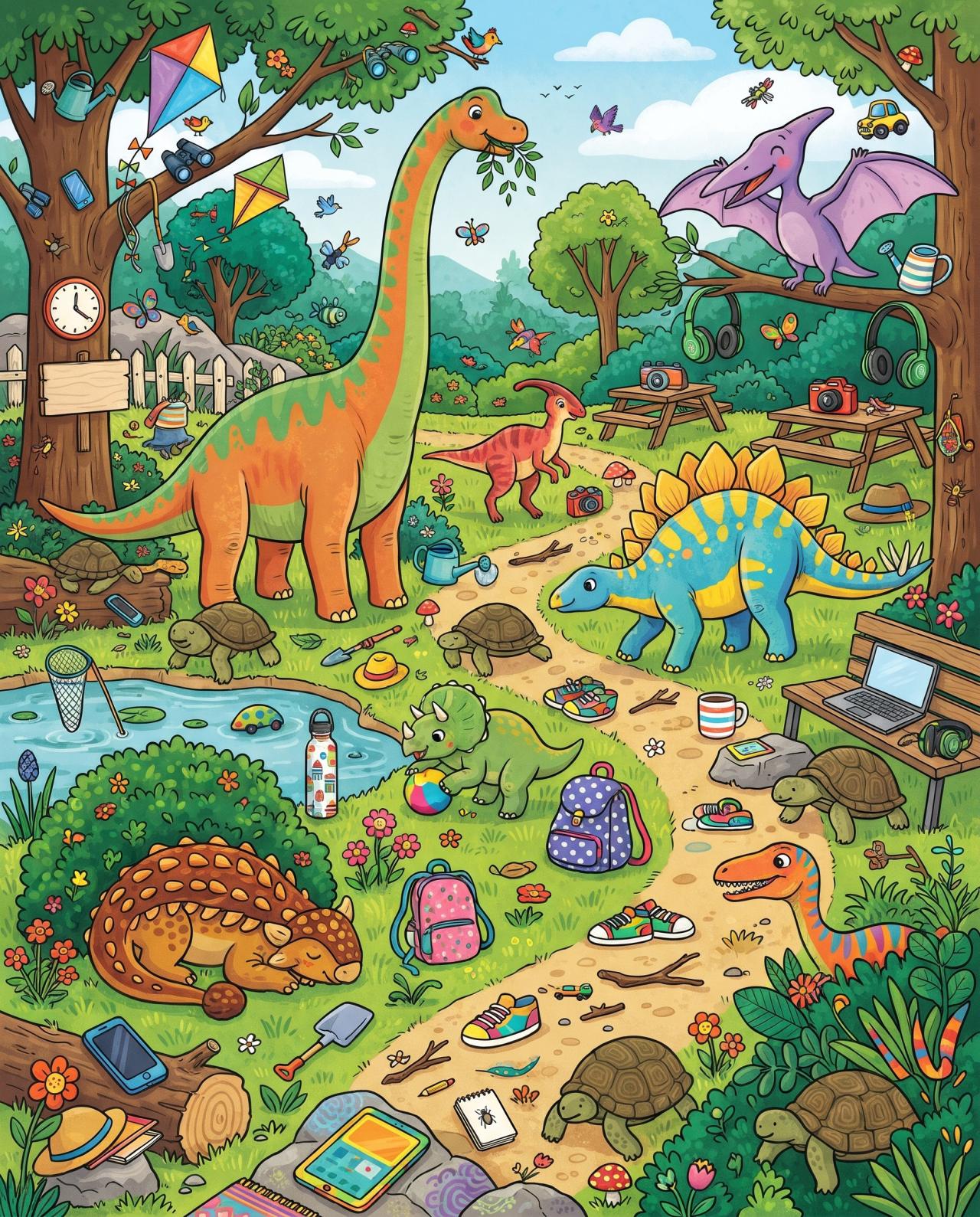
You can tap a difference on either the left or the right image, so you never lose time guessing which side to click. A magnifying glass unlocks if you've been searching a while, and hints arrive gradually. To practice, try the bookshop, which is full of shelves to compare, or the more whimsical dinosaurs and technology. Everything is gathered in the spot the difference category.
Playing as a pair
This one is great for two people sitting side by side or on a call. One looks at the left picture, the other at the right, and each describes what they see out loud: "There's a red mug by the lamp." The mismatch jumps out in conversation faster than it ever does in silence.
The ten-second reset
When your eyes stop seeing anything new, look away for ten seconds, out a window, across the room, anywhere. Then come back starting with the zone you checked last. A fresh look will often catch in seconds what a tired eye missed for minutes.
Your turn to play
Ready to put it into practice? Start with today's game, or browse the hidden objects, hidden letters, hidden numbers and spot the difference games. New here? How to play takes about a minute.
More guides
- How to find hidden objects faster: 10 tricks that actually work
- Hidden object games with kids: what works at each age
- Hidden object games for grandparents and other relaxed players
- Where hidden object games come from
- Behind the scenes: how a hidden object scene gets made
- Hidden letters and numbers: a field guide
- Brain games? What hidden object scenes really ask of you
- Comfortable screen play: setup, lighting and breaks
- Ten things to do with a hidden object scene
- Our Christmas and winter scenes, from cozy to tricky
- Hidden objects or hidden details: which one suits you?
- How to run a hidden object contest (family, classroom, club)