Where hidden object games come from
If you've ever flipped through a "Where's Waldo?" book (it's "Where's Wally?" in the UK) or puzzled over an "I Spy" riddle, you already know the pleasure of searching a picture. It's a much older habit than the internet. Here's a quick, far-from-complete tour of how it turned into a type of game.
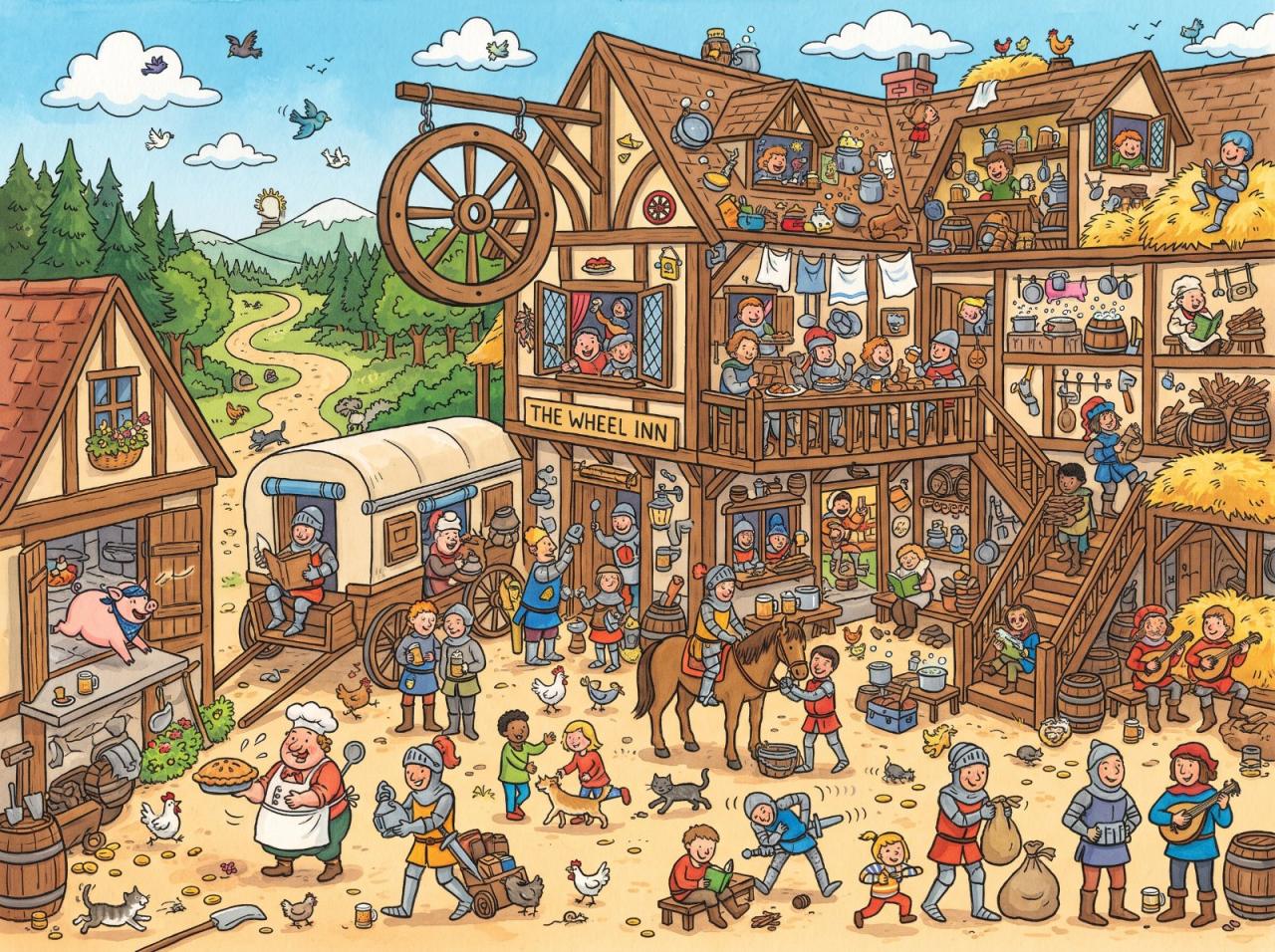
Long before Waldo: paintings you can get lost in
Around 1560, the Flemish painter Pieter Bruegel the Elder filled a huge canvas with dozens of children's games: hoops, leapfrog, knucklebones. Nobody is asking you to find anything, and yet you can stare at it for an hour. The recipe is already there: a big picture, loads of details, and the joy of noticing something new.
The wordless picture book
German-speaking countries have a word for large, crowded, text-free picture books: Wimmelbücher. The illustrator Ali Mitgutsch helped make the style popular from the late 1960s. Closer to home, anyone who grew up with Richard Scarry's busy, animal-filled pages knows the same feeling: you aren't being quizzed, you're being invited to hang around in a scene and make up stories. That lively-scene spirit is all over our settings.
When looking turned into finding
Two kinds of books taught generations of kids to search: some hide one recognizable character in a huge crowd, others, like "I Spy," challenge you to find a list of objects in staged photographs. Magazine puzzles such as the Hidden Pictures pages did something similar for the waiting-room crowd. The difference is subtle but important. You're no longer just looking, you have a task, and the picture is deliberately fighting back. That tension is the fun.
Then came the screen
When casual games arrived on computers and later phones, the genre had a new home. You could zoom, ask for a hint, replay as often as you liked, and compare notes with friends. Hidden object games became one of the most popular kinds of casual game, often loved by people who would never call themselves gamers.
These days
New illustration tools make it possible to produce more scenes and more themes than before. But what makes a scene good hasn't changed: a carefully chosen picture, clearly named objects and a fair hiding spot. We describe that quality-control work in How we make and check our scenes.
The part that never changes
Four and a half centuries on, the thrill is the same: a good picture, a simple goal, and that little "there it is!" when you finally spot it. Want to feel it again? Pick any scene on the hidden objects page and see how long it takes.
Your turn to play
Ready to put it into practice? Start with today's game, or browse the hidden objects, hidden letters, hidden numbers and spot the difference games. New here? How to play takes about a minute.
More guides
- How to find hidden objects faster: 10 tricks that actually work
- Hidden object games with kids: what works at each age
- Hidden object games for grandparents and other relaxed players
- Behind the scenes: how a hidden object scene gets made
- Spot the difference: a step-by-step game plan
- Hidden letters and numbers: a field guide
- Brain games? What hidden object scenes really ask of you
- Comfortable screen play: setup, lighting and breaks
- Ten things to do with a hidden object scene
- Our Christmas and winter scenes, from cozy to tricky
- Hidden objects or hidden details: which one suits you?
- How to run a hidden object contest (family, classroom, club)