Hidden objects or hidden details: which one suits you?
Browse the games and you'll see two small labels: OBJECTS and DETAILS. Lots of players tap without noticing, then think, "huh, this isn't like yesterday's." It isn't. Here's the difference, plainly.
Same picture, two different questions
A hidden object game asks: "Where's the yellow watering can?" You get a name and a small thumbnail, and the object was placed in the scene on purpose, to be hunted for.
A hidden detail game shows you a fragment of the picture (a bit of roof, the corner of a tablecloth, half a face) and asks: "Where does this piece come from?" Nothing was added. It's all already there, right in front of you.
| Objects | Details | |
|---|---|---|
| What you're given | a name and a thumbnail | a piece of the picture |
| Need to read? | it helps | no |
| What fools you | an object that's tilted or matches the background | patterns that repeat |
| What you practice | recognizing a shape | finding your way around a whole image |
What your brain is doing
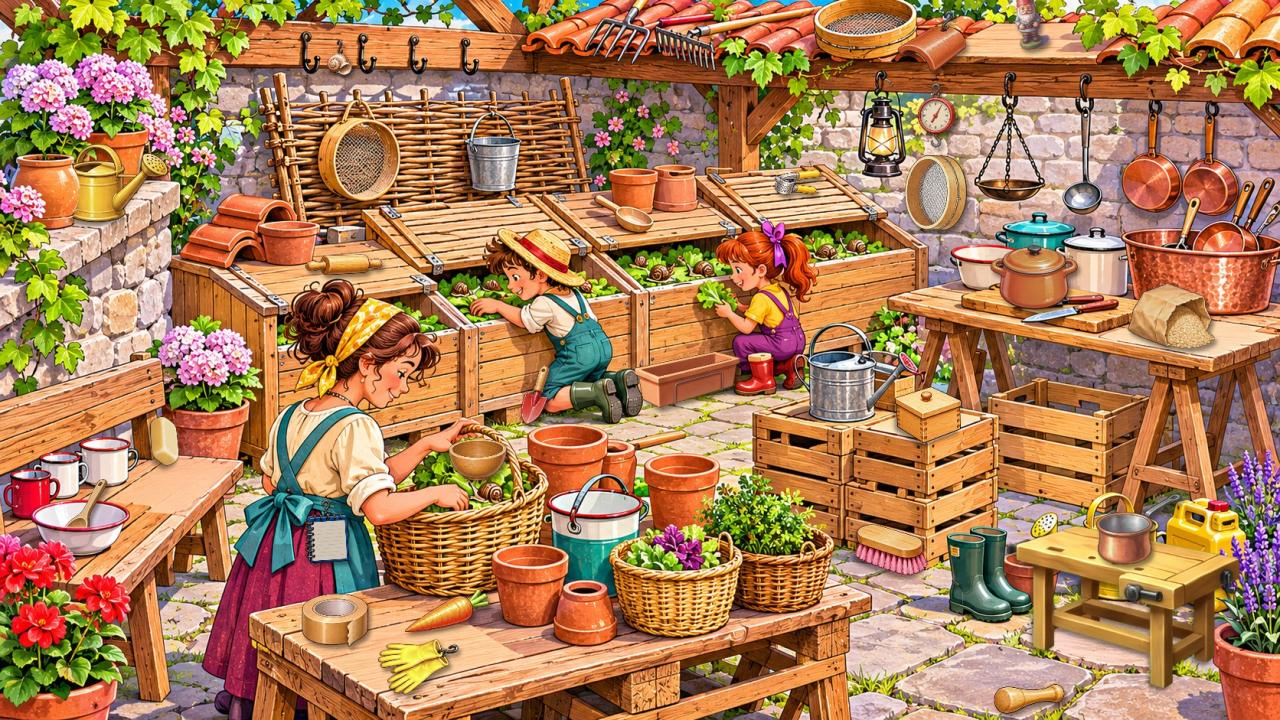
With objects, you filter. You hold a mental picture of "carrot" and throw out everything that isn't one. That's the job in the vegetable garden, where a carrot, a yellow watering can and a snail shell are tucked in among everything else.
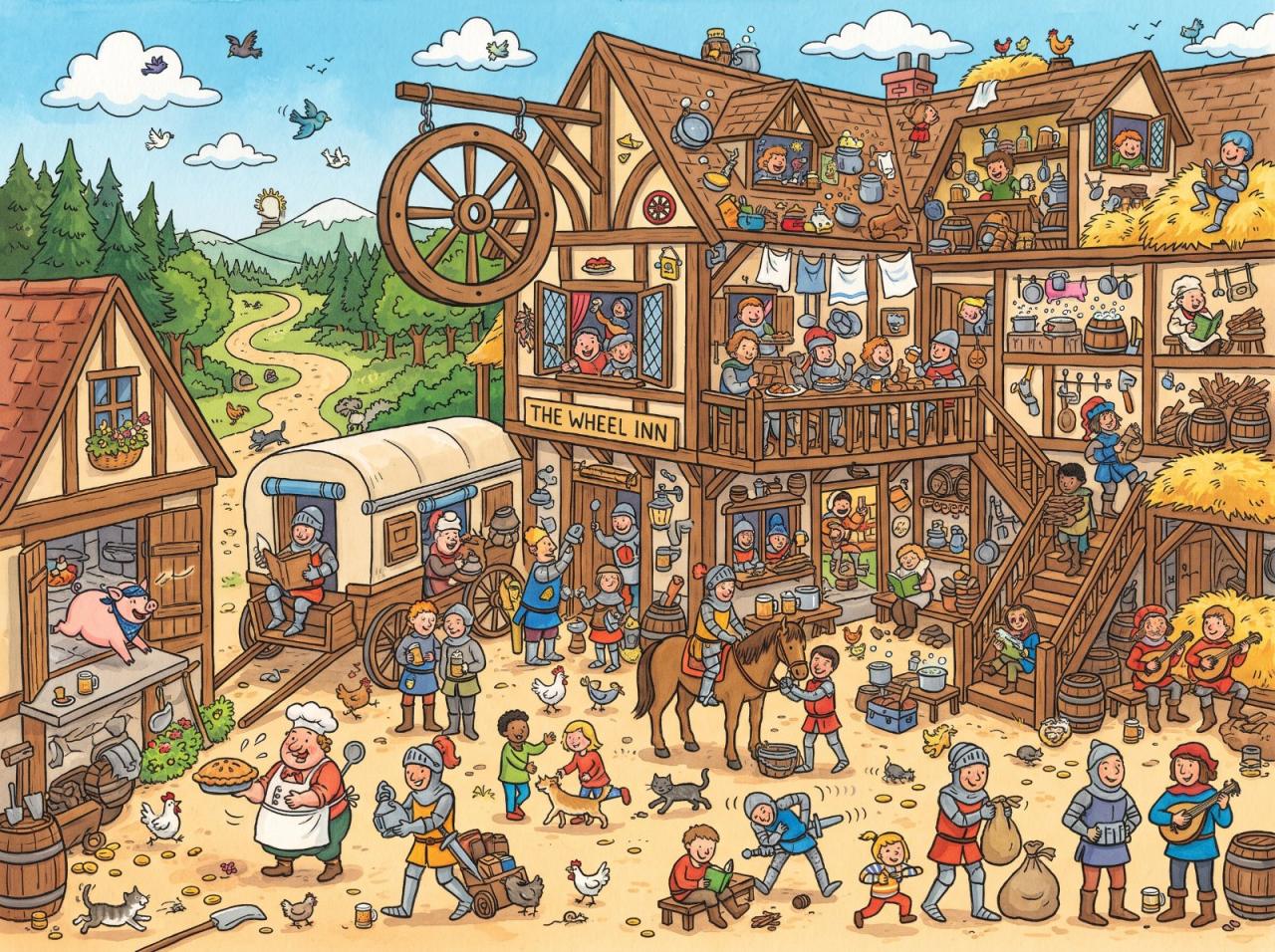
With details, it runs the other way. You start from a nameless scrap and rebuild what's around it, like a jigsaw piece. In the medieval inn, a bit of sleeve could belong to several people. So look at the edge of the fragment: part of a mug, the corner of a table. The edge gives you the answer. The middle almost never does.
Which should you pick?
You're playing with a little one who can't read yet. Details, no contest. It's picture against picture, and they won't need you.
You're learning a language, or teaching one. Objects. Every game runs through twenty-odd words with a picture for each, and the site comes in several languages.
You have five minutes. Objects. The first few come fast, and you can stop without feeling you've left something undone.
You want to really look at a picture. Details. By the end you know the scene by heart, and you've noticed things the game never asked for.
You get frustrated easily. Objects again. Having a name to hold on to is reassuring.
Our two cents
We don't agree among ourselves. Some of us find details more restful because there's nothing to read. Others find them harder because you don't know what you're looking for until you've found it. Best plan: switch back and forth. Both kinds live together on the hidden objects page, and the label on each thumbnail tells you which you're getting.
Your turn to play
Ready to put it into practice? Start with today's game, or browse the hidden objects, hidden letters, hidden numbers and spot the difference games. New here? How to play takes about a minute.
More guides
- How to find hidden objects faster: 10 tricks that actually work
- Hidden object games with kids: what works at each age
- Hidden object games for grandparents and other relaxed players
- Where hidden object games come from
- Behind the scenes: how a hidden object scene gets made
- Spot the difference: a step-by-step game plan
- Hidden letters and numbers: a field guide
- Brain games? What hidden object scenes really ask of you
- Comfortable screen play: setup, lighting and breaks
- Ten things to do with a hidden object scene
- Our Christmas and winter scenes, from cozy to tricky
- How to run a hidden object contest (family, classroom, club)